
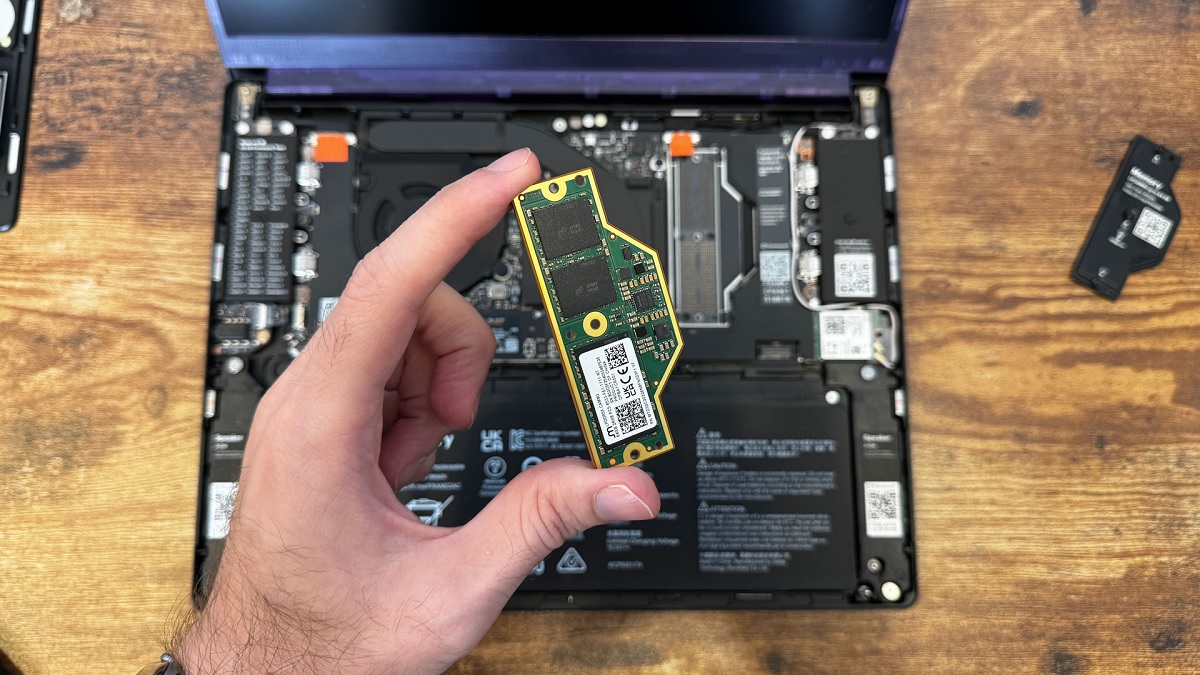
If your finance team has priced a laptop refresh this year, the quote probably came back higher than last year’s for the same specification. That isn’t a supplier trying it on. A global shortage of memory chips, driven by AI data centres buying up supply, has pushed the cost of RAM and storage to levels the PC industry hasn’t seen before.
For UK businesses with projects to staff, contractors to equip and events to run, that changes the maths. Laptop rental in the UK used to be the answer to a short-notice problem. In 2026 it’s increasingly the answer to a budget problem too. Here’s what’s driving prices, why buying now carries more risk, and how to decide when renting is the better call.
What’s happening to laptop prices in 2026
Memory used to be a modest slice of what a laptop costs to build. Market analyst TrendForce estimates that DRAM and SSDs normally make up around 15% of a notebook’s bill of materials, and projected that share would pass 30% in the first quarter of 2026. HP has told investors that memory now accounts for roughly 35% of a PC’s component cost.
The cause sits upstream. Memory makers have shifted production towards high-bandwidth and server memory for AI infrastructure, where margins are higher, leaving less for laptops and phones. Manufacturers have passed the cost on: Samsung and LG each raised notebook prices twice in three months this spring.
Few analysts expect a quick fix. IDC has warned the shortage could run well into 2027, and some forecasters point to 2028 before supply catches up.
Why buying outright carries more risk than it used to
Rising prices are only half the story. The bigger issue for most businesses is commitment.
When you buy a laptop, you lock in today’s price for a device you’ll keep for three or four years. If your headcount is stable, that can still make sense. But plenty of teams aren’t stable. Consider how often these situations come up:
- A consultancy wins a six-month engagement and needs 40 matching laptops imaged and ready for day one.
- An events company needs registration and demo machines for a three-day conference.
- A training provider runs an assessment week with a hundred candidates on identical devices.
- A business brings on seasonal or contract staff for a single quarter.
In each case, buying means paying a premium for hardware you need for weeks or months, then storing, managing and eventually disposing of it. With memory-driven price rises, that premium is larger than it was even a year ago.
There’s also a specification trap. When budgets tighten, buyers often trim RAM to hit a price point, then find the machines struggle with the software their teams actually run.
How laptop rental in the UK fits a tighter 2026 budget
Renting turns a capital purchase into an operating cost that matches the length of the job. You pay for the devices while you need them, hand them back when the work ends, and avoid carrying depreciating stock through a period when prices are volatile.
It also lets you specify for the task rather than the budget. If a project needs 32GB of RAM or a dedicated graphics card for rendering, you can rent that for the weeks it’s needed instead of compromising on a purchase.
Hire Intelligence, for example, built its laptop rental UK service around exactly this kind of flexibility. Hire periods run from one day to 24 months, and the fleet covers Windows, macOS and Chrome OS machines from brands including HP, Dell, Lenovo and Apple, from everyday business laptops to high-performance creative and gaming models.
What to look for in a rental partner
The hardware is rarely what separates providers. Most can source a business-grade laptop. The difference is everything around the device:
- Speed of response. Hire Intelligence aims to respond to quote requests within 20 minutes, which matters when a project starts on Monday.
- Pre-configuration. Devices can arrive with software loaded and settings applied, so staff log in and start work rather than spending their first morning on set-up.
- Scale and consistency. Supplying anything from one unit to 1,000+ matching laptops keeps a whole team on identical machines.
- Nationwide logistics. Delivery across the UK, often next day, from a network serving London, Birmingham, Manchester, Cardiff, Portsmouth and Glasgow.
- Hardware support and secure returns. Fast replacement if a device fails mid-project, and data wiping before kit goes back into the fleet.
When renting makes more sense than buying
Renting isn’t the right answer for every device in every business. Permanent staff on a steady workload may still be better served by owned or leased machines. As a rule of thumb, rental tends to win when:
- The need has an end date, whether that’s a project, a contract or an event.
- You need a quantity or specification your current fleet can’t cover.
- Devices must be identical and configured the same way.
- You’d rather not tie up capital while component prices are high.
- Data at the end of use needs to be handled properly, not left in a cupboard.
If two or more of those apply, it’s worth getting a rental quote alongside any purchase quote before you sign off the spend.
The bottom line
The 2026 memory shortage has made laptops more expensive to buy, and there’s little sign of it easing soon. For businesses with fixed, long-term needs, buying may still be the right move. But for the growing share of work that’s project-based, temporary or seasonal, renting gets the right machines in place for the right length of time, without betting on where component prices go next.
The smartest move this year isn’t necessarily spending less. It’s committing less, and keeping your options open until the market settles.
