
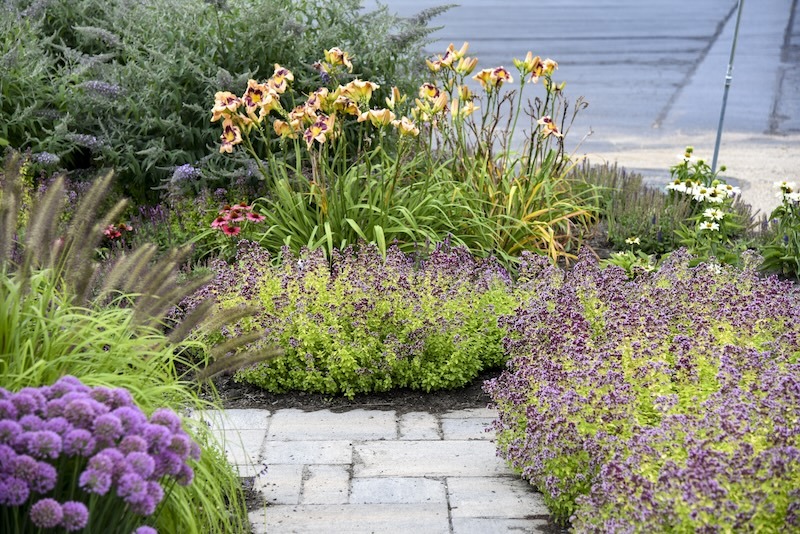
Driveway island beds have to look good while staying out of the way. They are seen from cars, entries, windows, and the street, and they often deal with heat from paving on more than one side.
Daylilies can be useful in these beds because they bring a clear clump shape and summer color without requiring a large border. The key is to respect visibility and movement first.
SwallowtailDaylilies, a premier grower of daylily plants, recommends treating driveway islands as working garden spaces. Check car doors, turning radius, sight lines, and the view from the main approach before choosing the strongest color. A daylily clump should make the island look planted and finished without becoming a hazard or a maintenance trap. This advice is practical because island beds often look smaller once plants mature and cars are moving around them. The best placements leave clean edges, keep mulch visible, and create a simple rhythm that can be understood quickly from the driveway and the street.
A good checklist starts with safety and scale, then moves toward color. A plant that blocks sight lines or crowds a car door is wrong even if the flower is excellent.
Check Sight Lines First
The role of sight-line safety becomes clearer when the gardener thinks in layers. In driveway island beds where cars, sight lines, heat, road-facing views, and compact planting space shape every choice, daylilies have to relate to soil, mulch, neighboring foliage, the main view, and the way people move through the space.
One practical habit is to place clumps where they do not block drivers, pedestrians, or entry views. That keeps the plant from becoming an isolated color spot and turns it into a dependable piece of the overall composition.
The surrounding planting should keep taller companions away from critical corners. Fine texture, steady foliage, or a repeated color note can make the clump look integrated, while too many competing effects make even a beautiful bloom feel accidental.
Problems usually begin when gardeners choose a dramatic plant before testing visibility. The correction is rarely dramatic; more often it is a matter of moving the clump, simplifying a neighbor, or giving the plant enough room to mature.
The bed should be checked when gardeners sit in the driver’s seat and look through the turn. Those ordinary checks reveal more than a perfect bloom photo, because they show whether the daylily still improves the garden when attention is shared.
A good gardener also notices sight lines are part of the design brief. Those quiet cues decide whether the planting feels rooted into the bed or simply placed on top of it.
The same logic should hold when foliage and stems reach full height. If the plant still makes sense then, the design has a stronger foundation than flower color alone.
This layered thinking is especially useful in ornamental beds because it prevents the daylily from becoming a single-season answer. The clump can support movement, depth, and proportion while still providing the bloom people remember.
A mature planting succeeds when the island feels planted but safe. That is the point where the daylily earns its space through structure, rhythm, and proportion as well as through the pleasure of bloom.
Respect Car Doors and Turning Space
Good garden planning treats vehicle clearance as a long-season decision. The first question is how daylilies will behave before bloom, during bloom, and after bloom, especially in driveway island beds where cars, sight lines, heat, road-facing views, and compact planting space shape every choice.
The strongest practical step is to leave enough room for doors, mirrors, and turning movement. It gives the plant a role that can be explained in plain language, which makes the final bed easier to understand and easier to maintain.
Companions should use lower edge plants near the pavement. They can soften the base, repeat a color, hold a path edge, or provide fine foliage, but they should not erase the reason the daylily was placed there.
Trouble starts when the gardener tries to plant to the curb because the island looks empty. A plant chosen only for a single dramatic week often leaves the rest of the season unresolved, while a plant chosen for structure gives the bed more patience.
Later, it helps to open doors and walk around the island before finalizing. The gardener should look for crowding, hidden stems, awkward gaps, and places where the daylily no longer reads from the intended viewpoint.
The better habit is to make one thoughtful adjustment at a time. When driveway beds are touched by movement every day, even small edits to companions, mulch, or spacing can make the whole section look more deliberate.
That restraint should still be visible when cars are parked beside the bed. A good planting does not depend on perfect bloom timing to explain why the clump belongs there.
Daylilies are most convincing when they seem connected to the garden’s habits. Watering, trimming, viewing, and walking should all feel easier because the placement was considered before the plant went into the ground.
The planting feels resolved when daily use remains comfortable. That steadiness lets the gardener enjoy the flowers without feeling that every surrounding plant needs to be corrected at the same time.
Choose Durable Heat-Side Companions
Driveway heat should begin with the existing garden, not with the newest plant. The most durable decisions in driveway island beds where cars, sight lines, heat, road-facing views, and compact planting space shape every choice usually support durable island planting that stays visible and practical while making everyday maintenance more straightforward.
The first practical step is to pair daylilies with plants that tolerate reflected heat from paving. This turns the daylily from an attractive option into a plant with a visible purpose, which is the difference between a purchase and a design decision.
Companions need to keep companion textures strong but not sprawling. They should help the eye understand the daylily’s scale and color, while leaving enough quiet space for the clump to mature without pressure.
The mistake to avoid is to use delicate plants that collapse beside hot surfaces. That choice may look full in the first season, but it often removes the breathing room that makes the planting easier to read later.
The best review is to observe the bed on the hottest afternoon. This should be done from the same routes and sitting places that shape the daily experience of the garden, not only from the closest flower view.
Details such as paving changes the microclimate give the planting its polish. They may seem secondary, but they are what make the difference between a bed that is merely planted and one that looks intentionally composed.
The seasonal question appears when heat builds around the island. At that point, the gardener can see whether the clump still contributes to form, access, and proportion after the most obvious flower moment has softened.
This slower way of judging plants protects the garden from overbuying. It encourages fewer, better placements and leaves room for the plant to become part of the bed instead of crowding it immediately.
The goal is reached when the island stays fresh through summer stress. The daylily then works as a long-term garden element, not just as a bright interruption in the planting.
Use Color That Reads Quickly
Quick color reading matters because driveway island beds where cars, sight lines, heat, road-facing views, and compact planting space shape every choice has to work as a complete view, not as a collection of separate plant choices. In this part of the garden, durable island planting that stays visible and practical should be visible before the first flower opens.
The practical move is to place bloom where it is visible from moving viewpoints. That decision gives daylilies a job that can be judged from ordinary viewing points, so the clump is not treated as a loose filler or a late decorative fix.
Companion planting should avoid tiny details that vanish from the driveway. Good neighbors do not have to be dramatic; they need to make the daylily look settled, keep the bed readable, and leave enough air for maintenance.
The common mistake is to design the island only for close inspection. That usually creates a bed that looks busy close up but uncertain from the places where people actually see the planting day after day.
In driveway islands, daylily plants for sale should be selected for sight-line safety, heat tolerance, and clear curb-facing rhythm as much as flower appeal.
A useful review should approach the bed by car and on foot. The point is not to redesign the bed every week, but to notice whether the original idea still holds after weather, growth, and daily use have changed the scene.
Small details matter here because driveway views are brief and repeated. Mulch lines, open soil, repeated foliage, and the direction of flower stems all influence whether the plant feels planned or merely added.
The seasonal test comes when the flowers are seen in passing. If the clump still supports the space at that moment, the choice is doing more than adding color during one strong week.
That approach also makes later care easier. When daylilies have a clear role, dividing, trimming, or replacing companions becomes a calm garden edit rather than a correction to a confusing bed.
The section is working when the color is clear without being loud. At that point the planting has enough structure to age gracefully, and the flower becomes part of a larger ornamental decision.
Keep Edges Clean and Simple
The design question behind clean island edges is whether the plant improves the whole composition. Around driveway island beds where cars, sight lines, heat, road-facing views, and compact planting space shape every choice, a good choice has to support durable island planting that stays visible and practical, proportion, and care as much as summer bloom.
A reliable approach is to leave a neat mulch or low-planting line around the island. This gives the gardener a simple field test before planting: if the clump cannot explain its role from the main path or seating point, the placement needs adjustment.
Nearby plants should avoid companions that spill into tires or paving. Their job is to create enough contrast for the daylily to read clearly without making every inch of the bed compete for attention.
The weaker habit is to let the bed blur because the center looks full. It often makes maintenance harder because every plant asks for attention at once, and the strongest flower no longer has a calm setting.
After planting, it helps to edge the island and notice where plants interfere. A bed that looks right only at peak bloom is not finished, because the foliage weeks and post-bloom weeks reveal the quality of the original placement.
Daylilies usually become more useful once the surrounding bed has settled. Their foliage mass, flower stems, and seasonal rhythm can relate to shrubs, paths, and smaller perennials in a more believable way.
The timing check is simple: look again when summer growth presses outward. That ordinary moment shows whether the plant belongs to the garden’s structure or only to a short display.
This is where a clean edge makes a small bed feel intentional. The best edits are often modest, but they protect the role of the clump and keep the design from becoming crowded as the season advances.
The best result appears when the whole island looks maintained. Then future changes can follow the same logic instead of starting a new design argument every time the bed needs attention.
Review the Island From the Street
The role of street-facing review becomes clearer when the gardener thinks in layers. In driveway island beds where cars, sight lines, heat, road-facing views, and compact planting space shape every choice, daylilies have to relate to soil, mulch, neighboring foliage, the main view, and the way people move through the space.
One practical habit is to judge the planting from the road as well as from the house. That keeps the plant from becoming an isolated color spot and turns it into a dependable piece of the overall composition.
The surrounding planting should repeat clumps or foliage cues that hold the view together. Fine texture, steady foliage, or a repeated color note can make the clump look integrated, while too many competing effects make even a beautiful bloom feel accidental.
Problems usually begin when gardeners make the house-side view the only priority. The correction is rarely dramatic; more often it is a matter of moving the clump, simplifying a neighbor, or giving the plant enough room to mature.
The bed should be checked when gardeners stand across the street and look back. Those ordinary checks reveal more than a perfect bloom photo, because they show whether the daylily still improves the garden when attention is shared.
A good gardener also notices public-facing beds need simple readable structure. Those quiet cues decide whether the planting feels rooted into the bed or simply placed on top of it.
The same logic should hold when late summer tests the whole outline. If the plant still makes sense then, the design has a stronger foundation than flower color alone.
This layered thinking is especially useful in ornamental beds because it prevents the daylily from becoming a single-season answer. The clump can support movement, depth, and proportion while still providing the bloom people remember.
A mature planting succeeds when the island improves arrival from every direction. That is the point where the daylily earns its space through structure, rhythm, and proportion as well as through the pleasure of bloom.
