

You have got the outdoor space with patio, seating, maybe even a bar cart situation. But the grill? It is feeling temporary. That cart served you well, but now you want something permanent. Built in. Like it actually belongs there.
A properly designed Kamado Joe kitchen cabinet solves most of these headaches before they start. At BBQs2u, they stock modular frames and components built specifically for this, so you are not guessing, not measuring seventeen times, and still getting it wrong.
Their setups position the grill at the correct height, leave vents exposed where they need to be, and include actual storage for all the bits you will accumulate. It looks intentional. Like an architect designed it.
Adding a grill is not simple. Height matters; kamados are tall, so they need to sit lower than you would expect. Otherwise, you are reaching up like some kind of barbecue giraffe. Ventilation matters too. Those bottom vents need airflow, so you cannot just seal the thing in a cabinet. Accessories pile up fast: heat deflectors, pizza stones, ash tools. They need homes. Drawers help. Counter space helps more.
What Actually Matters When You Are Building
You cannot just wing it. Here is what trips people up:
Height is everything. Kamados are tall. If you set them at standard counter height, you will be cooking with your elbows above your shoulders.
- Measure your grill’s total height, including feet
- Subtract that from your desired cooking height
- Build your base to match exactly
Airflow is not optional. Those bottom vents control temperature. Block them, and you have got a very expensive ceramic planter.
- Never fully enclose the base
- Leave the front completely open
- Consider a recessed design with an open front
Storage sneaks up on you. You will buy one accessory. Then another. Suddenly, there is a pizza stone, a heat deflector, and three types of charcoal.
- Include drawers from day one
- Leave cabinet space under prep areas
- Plan for a cover when not in use
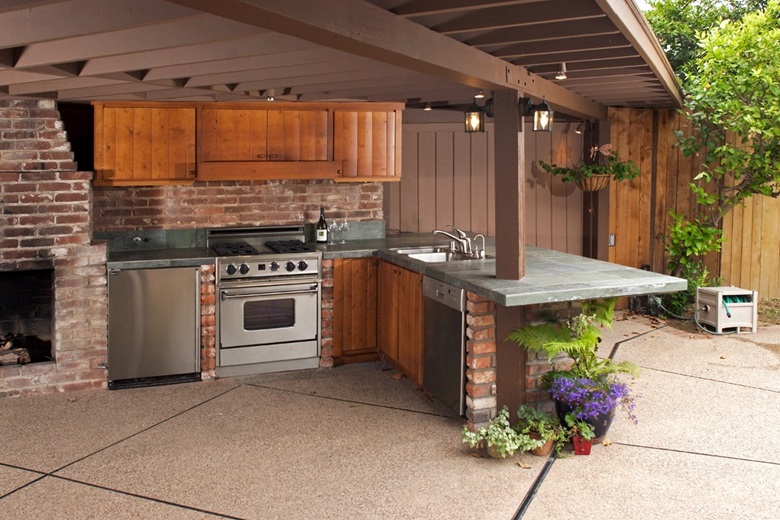
Materials Matter More Than You Think
This is not indoor kitchen stuff. Weather happens. Heat happens.
Non-combustible is non-negotiable. Wood looks beautiful. But wood plus a 700°F ceramic grill equals real trouble.
- Concrete panels work brilliantly, heat-resistant, weather-proof
- Stone or brick is classic for a reason
- Metal frames are fine but need rust protection
Think about your climate. Coastal? Salt air eats steel. Freeze-thaw cycles? Moisture in the ceramic can crack. Keep it covered. Keep it dry.
When It All Comes Together
Here is the thing nobody tells you. When you do this right, when the grill sits at the perfect height, and everything has a home, something shifts. You stop cooking and start hosting. You are not running inside every ten minutes. You are just out there. With everyone else.
Friends linger longer because you are not disappearing. Meals become events. And you are standing there with tongs in one hand, probably a drink in the other, actually enjoying your own party for once. That is the goal. That is what you are building toward.
